
Zeolite Australia Zeolite for pool
Description
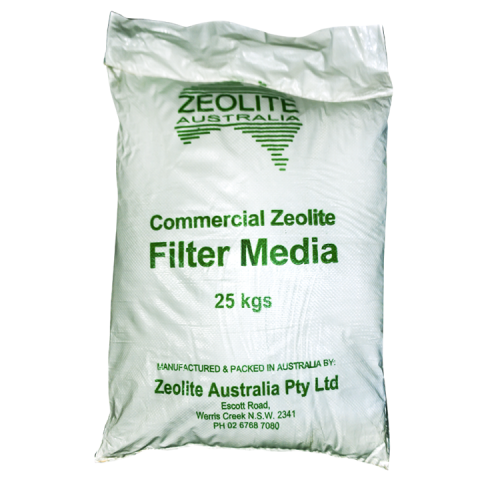
Zeolite Australia's active filter media is made from the unique natural mineral called Zeolite. This environmentally friendly mineral has a 3-dimensional structure of microscopic apertures and channel ways like a hard, but porous sponge. Zeolite’s porous structure provides a huge surface area which traps the smallest particles, down to 3 microns, and removes them from your pool.
The unpleasant effects of stinging eyes, irritating or dry skin, acrid chemical smells are mostly eliminated. These are generally caused by mono-and di-chloramines formed by the reaction of ammonia / ammonium and the chlorine used for disinfection and prevents the formation of these irritating and dangerous compounds.
The chemical action of Zeolite and its capacity results in a more efficient use of chlorine and reduction in other chemicals used for pH control. As a result the total dissolved solids (TDS) discharge to the environment is lower.
Features:
- The performance of D.E. with the ease of sand.
- Better filtration (2 microns) means a saving in chemicals usage and better looking water.
- Removal of ammonia – better swimming comfort – no smell – no more irritation to skin and eyes.
- Because of its greater surface are you will not have to backwash as often – on average twice as long between backwashing therefore saving water – up to 50%
- Leading Australian swimming pool filter manufactures recognize these benefits and have chosen to promote this ultimate filter media.
- No only is Zeolite chosen as the best form of filter media in domestic pools it is being used in many aquatic centres – swim schools and council pools through Australia and overseas.
- Zeolite comes from a naturally formed volcanic rock which is mined at Werris Creek in N.S.W. Australia.
Specifications
Appearance: Light pink powder
Composition: contains tabular chlinoptilolite (zeolite) crystals. Minor components are quartz, mordenite clay and mica
Hardness: 7 Mohs
Ammonia Odour 160 m.eq./100g
Particle Diameter: 75 micron powder to 6mm chips
Stability: Stable down to acid pH2; temperatures up to 400 degrees Celsius
Ammonium Ion Exchange Capacity: 104 m.eq/100g
Cation Exchange Capacity: Na: 12, K: 4, Ca: 85, Mg: 18; Total: 119 m.eq./100g
Safety: Non toxic, non combustible and Insoluble